 Call us now:

Planning a wedding that honors your Middle Eastern roots? The khanjar sword offers a powerful way to connect your celebration to centuries of tradition. This ceremonial Omani dagger, with its distinctive curved blade and ornate silver sheath, can transform your wedding décor from generic to genuinely meaningful. But integrating a blade into your celebration requires careful planning. This guide walks you through every step of safely and beautifully incorporating a khanjar into your DIY wedding design.
What Makes the Khanjar Different from Other Ceremonial Blades?
The khanjar isn’t just decorative metalwork. This traditional dagger represents honor, masculinity, and social status across the Arabian Peninsula, particularly in Oman where it’s a national symbol appearing on the national flag and currency. Unlike straight daggers or swords, the khanjar features a short, sharply curved blade (typically 10-15 cm) housed in an elaborate sheath adorned with silver filigree work. The handle often incorporates precious materials like sandalwood, sustainable alternatives to ivory, or horn. Omani men traditionally wear it at the waist during formal occasions, weddings included. For your wedding, this cultural weight transforms the khanjar from mere decoration into a statement about identity and heritage.
Selecting Your Khanjar: Authentic vs. Decorative Replicas
Not all khanjars suit wedding displays equally. You face a fundamental choice between authentic antique pieces and modern decorative replicas. Authentic khanjars, particularly those from Omani silversmiths, feature hand-forged blades and intricate silver work that can cost $500-$3,000. These carry genuine cultural weight but present challenges: sharp blades require special handling, and family heirlooms may be irreplaceable if damaged.
If you’ve been browsing online for a khanjar dagger for sale, you’ve likely noticed that decorative replicas, available from Middle Eastern import shops or online retailers for $80-$300, offer a practical alternative. Quality replicas maintain visual authenticity—curved blade profile, silver-toned sheath detailing, traditional proportions—while using blunted edges and lighter materials. For DIY weddings, replicas provide three advantages: lower cost allows purchasing multiple pieces for different display zones, reduced liability if guests handle them, and no risk to precious family artifacts.
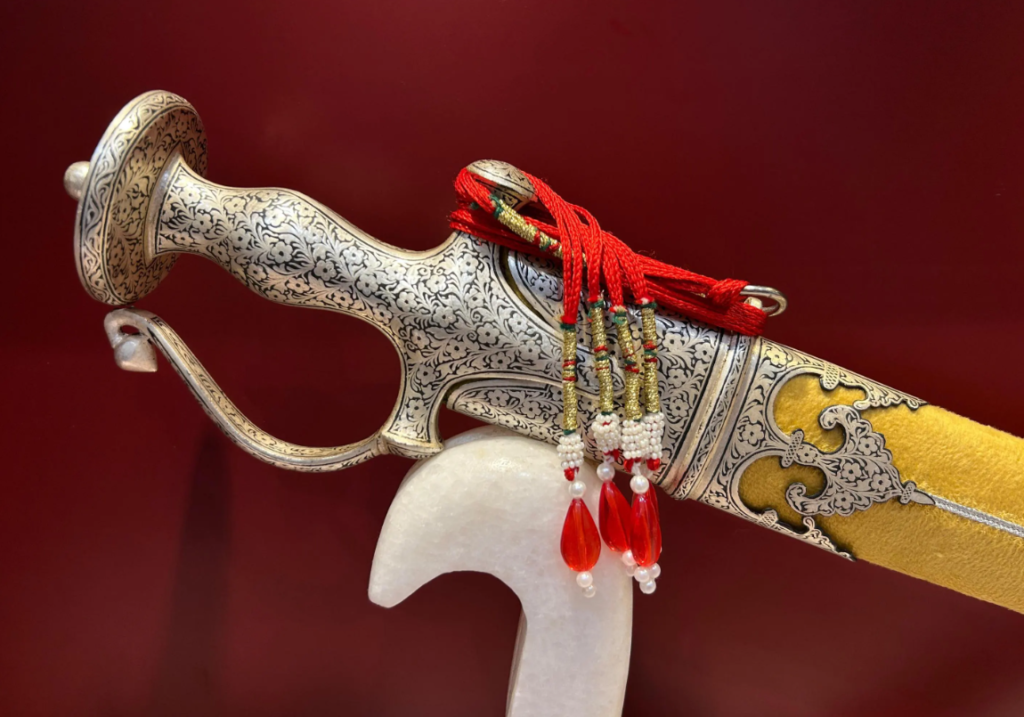
When selecting a replica, examine the craftsmanship closely. Quality pieces feature detailed engraving on the sheath, proper weight distribution, and authentic proportions. Avoid obviously cheap versions with plastic components or incorrect blade curves—guests familiar with khanjars will immediately recognize inauthenticity.
The Safety Question: Addressing Venue and Insurance Concerns
Many wedding professionals will tell you that displaying any weapon, cultural significance aside, creates unnecessary risk. Venues worry about intoxicated guests, children reaching for shiny objects, and potential injuries that could trigger lawsuits. Insurance policies often contain clauses about “dangerous implements” that could void coverage if something goes wrong.
This concern holds weight in scenarios involving unsecured displays in high-traffic areas, authentic sharp blades within guest reach, or venues with strict liability policies. However, for couples planning intimate celebrations (under 150 guests) with proper safety protocols, the risk becomes manageable. The key lies in treating the khanjar as you would expensive crystal or delicate floral installations—beautiful to observe, protected from careless handling.
Critical Safety Protocols
- Use locked display cases for authentic sharp-bladed khanjars.
- Mount displays at heights above casual reach (120-150 cm).
- Employ dulled replicas for any interactive stations.
- Assign a designated person to monitor photo stations.
- Obtain written venue approval at least three months in advance.
- Verify insurance coverage explicitly includes your display method.
When displayed in locked cases, mounted behind barriers, or supervised at photo stations, the khanjar presents no more danger than a champagne flute. For couples whose cultural identity centers on Arabian heritage, the emotional and symbolic value far outweighs the minimal, properly-managed risk.
Legal Considerations for Blade Display
U.S. knife laws vary dramatically by state and municipality. While the khanjar’s short blade (typically under 15 cm) generally falls outside restricted categories, some jurisdictions classify any curved blade as a “dirk” or “dagger” subject to regulations. For wedding display purposes, you’re not carrying the weapon, but venues may still have concerns.
California, New York, and Massachusetts have stricter blade regulations than Texas, Arizona, or Florida. Research your specific county’s laws regarding blade length and public display through your local law enforcement website. Most importantly, communicate with your venue’s insurance carrier. Some policies explicitly exclude coverage for events featuring weapons, even decorative ones. Request written confirmation that your display method (particularly if using enclosed cases) doesn’t violate their policy. This documentation protects you if questions arise later.
Three Display Zones That Showcase the Khanjar Safely
1. The Ceremonial Focal Point
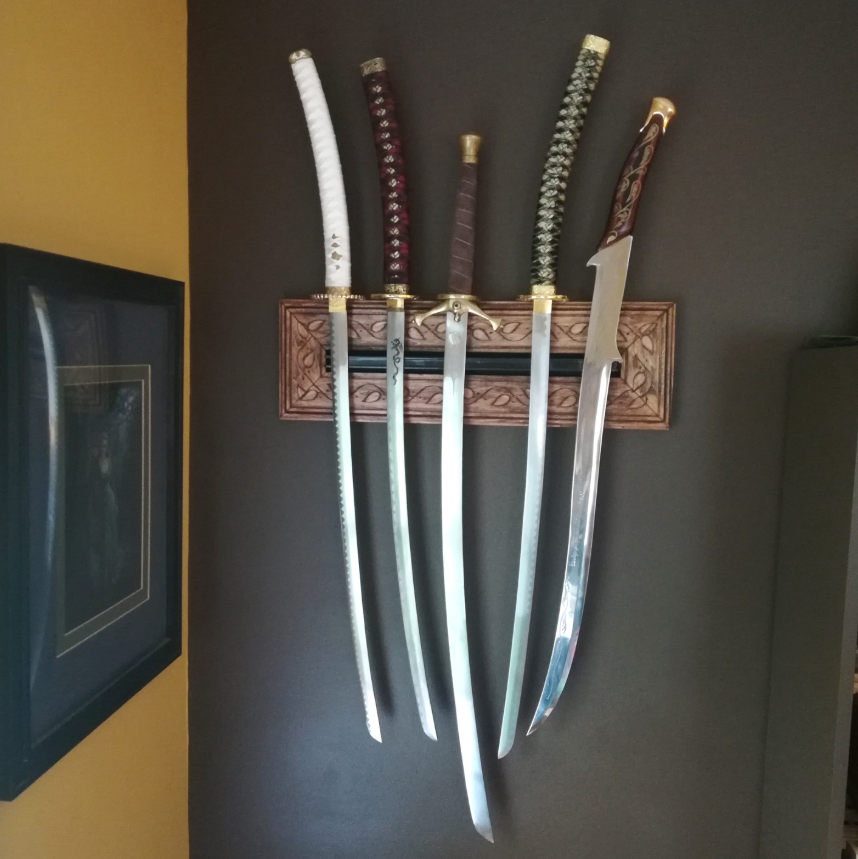
Position your primary khanjar display at the ceremony backdrop or sweetheart table. Mount the dagger horizontally on a custom wooden stand, elevated 120-150 cm off the ground—high enough to discourage casual touching, low enough to photograph beautifully. Surround it with complementary elements: brass lanterns, white roses, and draped fabric in jewel tones like emerald or sapphire.
For maximum impact, use directional uplighting (small LED spots positioned below) to highlight the silver sheath work. Place a small placard nearby explaining the khanjar’s cultural significance. Your sign might read: “The khanjar has symbolized honor and heritage in Oman for over 1,000 years. This piece represents our family’s connection to Arabian traditions.”
2. The Interactive Photo Station
Create a supervised photo opportunity where guests can pose with a replica khanjar. Set up a backdrop featuring traditional Arabic geometric patterns. Station a trusted friend or hired attendant here to hand the khanjar to guests for photos, then immediately retrieve it.
Provide props like embroidered cushions, a decorative wooden chest, or traditional coffee pots (dallah). The key word is “supervised”—never leave the khanjar unattended at this station, even for a moment.
3. The Heritage Display Table
Dedicate a table to your cultural story. Place the khanjar in a shadow box frame (available at craft stores for $40-$80) alongside other meaningful items: grandmother’s henna designs, traditional coffee cups, dates in ornate bowls, or family wedding photos. The shadow box keeps the khanjar visible yet completely inaccessible.
Material Pairings That Enhance Traditional Aesthetics
The khanjar’s silver and steel demand thoughtful material companions. Avoid competing metallics like gold or rose gold. Instead, pair with:
- Rich textiles: Velvet table runners in burgundy, navy, or forest green.
- Natural wood: Dark walnut or mahogany display stands ground the ornate detailing.
- Brass accents: Lanterns or trays in aged brass complement silver without competing.
- White florals: Roses, peonies, or orchids offer clean contrast.
Comparison: Display Methods for Different Wedding Scales
| Display Method | Best For | Cost Range | Safety Level | Visual Impact |
| Glass Display Case | Formal weddings, 100+ guests, antique khanjars | $150-$400 | Highest | High (Museum quality) |
| Mounted Wall Display | Intimate venues, 50-75 guests | $60-$150 | Medium | Very High (Dramatic) |
| Supervised Photo Station | Interactive couples, all guest counts | $80-$200 | Medium-High | High (Experience) |
| Shadow Box Frame | DIY couples, heritage storytelling | $40-$100 | Highest | Medium (Contextual) |
Common Mistakes That Undermine Your Display
Placing the Khanjar Where Everyone Can Grab It
Even with dulled edges, a dropped metal object can cause harm.
- The solution: If you want the khanjar on a table, use a display stand with a locking mechanism or place it inside a clear acrylic case ($50-$120).
Mixing Cultural Symbols Without Understanding Context
Pairing the khanjar with Turkish evil eyes, Moroccan lanterns, and Persian rugs can create cultural confusion.
- The solution: Build your décor palette around specific Gulf Arab aesthetics or create distinct zones for each culture if blending backgrounds.
Forgetting to Communicate with Your Venue
Don’t wait until setup day to find out weapons are banned.
- The solution: Discuss plans during the initial walkthrough and get written approval three months in advance.
Using Poor Quality Lighting
Standard overhead lighting makes silver work look dull and gray.
- The solution: Use small LED spotlights at 45-degree angles to create highlights on raised silver elements.
Building a Heritage Narrative Around the Khanjar
The khanjar becomes exponentially more meaningful when you tell its story. Create a small printed card (13×18 cm) to place near your display:
“The khanjar has been worn by Omani men for over 1,000 years, symbolizing honor, courage, and heritage. This piece represents [groom’s] family’s connection to [specific region], where his grandfather wore a similar khanjar at his own wedding in 1952. By displaying it today, we honor the generations who came before us and the traditions we carry forward.”
Maintenance and Transport: Protecting Your Investment
- Cleaning: Two weeks before the wedding, clean the silver using a jewelry polishing cloth.
- Transport: Wrap the khanjar in acid-free tissue paper and use a padded case (like a camera bag).
- Guardian: Assign one trusted person to be responsible for setup, monitoring, and pack-down.
The Compromise: Beauty vs. Accessibility
A wedding with many young children requires stricter security measures than an adult-only celebration. Most successful displays split the difference: use an authentic family khanjar in a locked case for the main décor, and provide a high-quality dulled replica at a supervised photo station. This approach gives you both security and engagement.
Beyond the Wedding: Preserving Your Display
- Frame it permanently: Mount the khanjar in a shadow box for your home as a permanent reminder.
- Create a traveling heirloom: Pass it to a younger family member with a note documenting its history.
- Proper storage: Keep it in a climate-controlled environment, wrapped in acid-free tissue, and store it flat.
Your Heritage, Your Way
Integrating a khanjar sword into your DIY wedding décor is about finding the intersection between cultural authenticity, personal meaning, and practical safety. By following these protocols, you create a celebration that honors your heritage while keeping your guests comfortable. Start planning at least four months out to ensure every detail is perfect.
Would you like me to help you draft the text for the descriptive placard or the communication letter for your venue?